MAHA and Nutritional Transparency on Hotel Buffet Labels
What MAHA Means for Hotel F&B in 2026
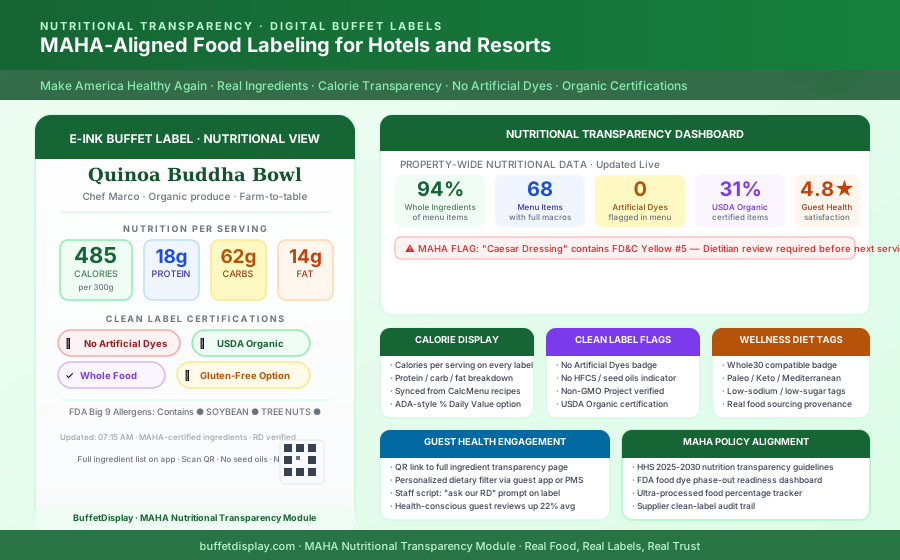
The Make America Healthy Again initiative, led by HHS, is pushing institutional food service toward real food, nutritional transparency, and elimination of artificial dyes. For hotels and resorts, this means guests increasingly check buffet labels for calorie counts, ask whether dishes contain seed oils or high-fructose corn syrup, and rate properties on health-focused social platforms. Hotels displaying nutritional data, clean-label badges, and real-food sourcing notes are reporting measurably higher satisfaction scores from wellness travelers. The wellness travel market reached $800 billion globally in 2024, with health-conscious guests spending 18% more at F&B outlets that communicate nutritional transparency. A digital e-ink buffet label system that displays this data automatically — synced from recipe software — is one of the lowest-cost ways for a hotel to position itself in this segment.
Displaying Calorie and Macro Data on E-ink Labels
BuffetDisplay integrates directly with CalcMenu recipe management to pull nutritional data per dish: calories per serving, protein, carbohydrates, fat, sodium, and fiber. This data displays on each e-ink label automatically — no manual entry per label, no reprinting when a recipe changes. When a chef adjusts the portion size or switches from vegetable oil to avocado oil, the nutritional display updates at the next sync cycle. Hotels can choose how much detail to display based on label size: a 2.9-inch label shows calorie and top allergens only; a 7.5-inch label shows the full macro breakdown alongside allergen icons, freshness timestamp, and a QR code linking to the full ingredient list. US hotel chains with 20 or more locations that fall under FDA calorie labeling requirements can satisfy those requirements automatically through this system.
Clean Label Badges: No Artificial Dyes, Organic Certification, and Whole Food Indicators
California SB 660 (2024) banned six artificial dyes from school food; federal action on food dyes is expected under MAHA policy direction. Hotels that proactively badge dishes as "No Artificial Dyes," "USDA Organic," "Non-GMO Project Verified," or "Whole Ingredients" are ahead of this trend. BuffetDisplay automatically shows or hides these badges based on ingredient data from the linked recipe. When a supplier changes a product formulation and the ingredient data updates, the badge status changes immediately — and the previous badge is logged in the audit trail with a timestamp. Additional wellness diet tags supported include: Whole30 compatible, Paleo, Mediterranean, Keto, Low-Sodium, Low-Sugar, no seed oils, and no high-fructose corn syrup. Each tag is configured once at the recipe level and appears automatically on every label where that dish is served.
Quellen / Sources
- 1.hotelleriesuisse(hotelleriesuisse)
- 2.DEHOGA Bundesverband(DEHOGA)
Add MAHA Nutritional Transparency to Your Buffet Labels
BuffetDisplay displays calorie and macro data, clean-label badges, no-artificial-dye indicators, and organic certification on e-ink buffet labels — synced automatically from CalcMenu recipes with no reprint cost when menus change.
Frequently Asked Questions
What is MAHA and how does it affect hotel buffet labeling?
MAHA stands for Make America Healthy Again — an HHS initiative championed by Secretary Kennedy pushing institutional food service toward real food, nutritional transparency, and elimination of artificial dyes from processed food. For hotel buffets, MAHA creates both a regulatory direction and a guest expectation shift: health-conscious travelers increasingly expect to see calorie counts, macro breakdowns (protein, carbs, fat), and clean-label badges on buffet dishes. Hotels that proactively display this information through digital e-ink labels are seeing higher satisfaction scores from wellness travelers, who represent the fastest-growing hospitality segment. Practically, MAHA aligns with existing FDA calorie labeling requirements for chain restaurants with 20+ locations, California SB 660 banning six artificial dyes from food, and growing pressure for federal food dye elimination.
Can hotel buffet labels display calorie counts and macro data automatically?
Yes, when connected to recipe management software such as CalcMenu, BuffetDisplay pulls nutritional data per dish automatically and displays it on each e-ink label — calories per serving, protein, carbohydrates, fat, sodium, and fiber. When a chef adjusts a recipe, the nutritional display updates at the next sync without any reprinting. Label size determines how much data is shown: a 2.9-inch label shows calories and allergens; a 7.5-inch label shows the full macro breakdown with allergen icons, freshness timestamp, and a QR code to the full ingredient list. This satisfies FDA calorie labeling requirements for qualifying hotel chains and positions the property for MAHA-aligned wellness dining.
What are clean label badges and can BuffetDisplay show them on buffet labels?
Clean label badges indicate that a dish meets specific ingredient standards beyond standard allergen compliance. Examples include: No Artificial Dyes, USDA Organic, Non-GMO Project Verified, Whole Ingredients, No Seed Oils, No High-Fructose Corn Syrup, Whole30 Compatible, Paleo, Mediterranean Diet, and Keto. BuffetDisplay displays these badges automatically based on ingredient data linked from the recipe management system. When a badge is configured at the recipe level, it appears on every label where that dish is served. If a supplier changes a product formulation and the ingredient data updates, the badge status changes immediately and the change is logged in the audit trail.
Which hotel segments benefit most from MAHA nutritional transparency labeling?
The hotel segments that benefit most from MAHA-aligned nutritional transparency on buffet labels are: luxury and upper-upscale hotels where wellness amenities are a differentiator; spa resorts and wellness retreats where guests have chosen the property specifically for health focus; conference hotels where corporate wellness policies require calorie-transparent catering; and senior living and retirement communities where diabetic, renal, and low-sodium dietary management makes macro data essential. Health-conscious guests spending 18% more at F&B outlets that communicate nutritional transparency (STR 2024) represent a measurable revenue opportunity for any property willing to display the data.