Allergen Compliance in the Digital Age
Key Takeaways
- EU Regulation 1169/2011 requires allergen information at the point of service for all 14 regulated substances — this applies to hotels, not just restaurants.
- The most common allergen incident cause is not missing information but outdated information: a recipe changed but the label was not updated.
- Digital systems with a POS connection eliminate the update gap — a recipe change propagates to all labels automatically.
- A digital audit trail (timestamped log of every allergen change) is legally significant documentation if an incident occurs.
The Importance of Allergen Management
Aus der Praxis / From the field
DACH cantonal food authority inspections increasingly focus on the currency of allergen information at the point of service — not just whether it's present, but whether it matches the dish currently in the buffet. Paper labels have a structural update lag that digital systems eliminate: a menu change logged in the platform reaches every label in the property within 30 seconds.
Automated Compliance Tracking
For more information, see our hospital catering display solution.
Get the complete ROI calculator for your property
Enter your email and hotel name — we'll send the full cost-vs-paper breakdown with real numbers from comparable properties, plus a demo invite with no obligation.
No spam. Unsubscribe anytime. Your info is never shared.
The 14 EU Allergens: A Digital Compliance Challenge
EU Regulation 1169/2011 requires food businesses to declare 14 major allergens whenever present in a dish: gluten, crustaceans, eggs, fish, peanuts, soybeans, milk, nuts, celery, mustard, sesame, sulphur dioxide, lupin, and molluscs. For buffet operations serving 50-150+ dishes per service, tracking all 14 allergens across constantly changing menus by hand is a significant compliance burden and a serious safety risk.
Where Manual Systems Fail
The three most common failure points in manual allergen disclosure are: ingredient substitutions (kitchen uses alternative ingredient but label is not updated), transcription errors (allergen present in recipe database but missed during label creation), and timing gaps (label created at start of service but menu item swapped mid-service). Research by the UK Food Standards Agency found that 60% of allergen incidents in food service occurred due to inadequate information transfer between kitchen and front-of-house.
How Digital Buffet Labels Solve Allergen Compliance
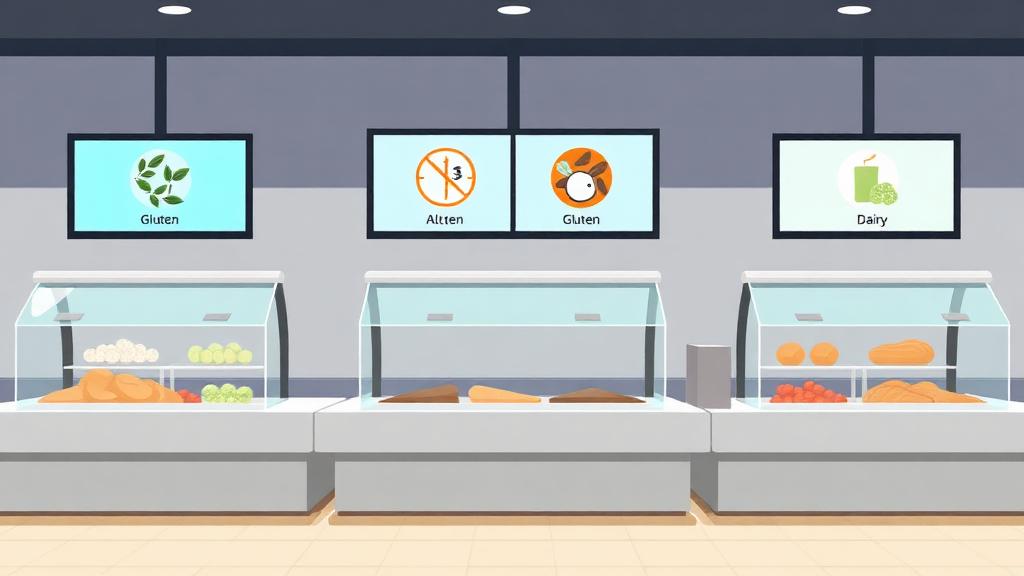
Digital buffet label systems like BuffetDisplay address all three failure points. When a recipe changes in the central database, every label across the buffet updates automatically with no transcription step and no delay. Allergen icons are generated from recipe data, not entered manually by staff, eliminating human error. When a dish is substituted mid-service, the new dish allergen profile appears immediately on the label. For hotel groups with multiple properties, one menu change in the central system propagates to every outlet simultaneously.
Key Digital Allergen Compliance Features
Automatic allergen icon generation
All 14 EU allergens displayed as standardised icons, pulled from recipe data. No manual entry required.
Real-time propagation
Any recipe or ingredient change updates every label across the buffet in under 30 seconds.
Audit trail
Every update is logged with timestamp and user, providing a full allergen compliance audit trail for inspections.
Multi-language allergen display
Allergen information shown in the guest preferred language alongside the dish name and description.
"Since switching to digital buffet labels, we have not had a single allergen disclosure complaint. Guests with allergies now approach the buffet with confidence."
— F&B Manager, 5-star hotel group, Switzerland
Compliance Beyond Allergens: HACCP and Temperature
Digital labeling systems extend compliance tracking beyond allergens. HACCP (Hazard Analysis and Critical Control Points) requires temperature logging for hot and cold buffet items. Some digital buffet platforms integrate with temperature sensors to display current serving temperature and log compliance data automatically, eliminating paper-based temperature logs and reducing audit preparation time.
What Digital Allergen Compliance Looks Like in Practice
A hotel buffet uses a commercial pastry mix for its croissants. On Tuesday, the supplier ships a new batch using a reformulated recipe that now includes sesame. In a manual paper system: the head chef updates the recipe card, tells the morning team to add sesame to the label, and relies on that verbal handover to reach the F&B coordinator who handles label printing. If the handover breaks down anywhere — different shift, distracted team, assumption that someone else handled it — the buffet continues showing the old label without sesame for days or weeks.
In a digital system: the head chef updates the sesame allergen flag in the recipe database. The label for that pastry updates automatically on every display across every outlet, within 30 seconds, with a timestamp in the audit log attributing the change to that user at that time. There is no handover chain that can break. The compliance action is the same as the recipe management action.
Staff Training and the Human Factor in Allergen Accuracy
This shift is significant. Transcription errors happen silently and at scale — they are inherent to any manual copying process. Verification errors are catchable through spot-checking and supplier confirmation. Hotels deploying digital allergen systems typically implement a supplier ingredient change process (a structured form the kitchen completes when a supplier notifies of a recipe change) and a periodic allergen audit (a cross-check of displayed allergen data against current supplier specification sheets, typically quarterly). These two practices, combined with digital display, create a defence-in-depth approach to allergen compliance that satisfies regulatory scrutiny.
Related Resources
Frequently Asked Questions
Quellen / Sources
- 1.EU-Verordnung Nr. 1169/2011 (LMIV)(EUR-Lex)
- 2.BVL Leitfaden Allergenkennzeichnung(BVL)
Ensure Guest Safety
Protect your guests and your business with automated allergen compliance.
Frequently Asked Questions
What are the 14 EU allergens that hotels must display?
EU Regulation 1169/2011 requires declaration of: gluten, crustaceans, eggs, fish, peanuts, soybeans, milk, nuts, celery, mustard, sesame seeds, sulphur dioxide, lupin, and molluscs. All 14 must be clearly indicated at hotel buffets.
How do digital buffet labels improve allergen compliance?
Digital labels pull allergen data directly from the recipe database, eliminating manual transcription errors. When ingredients change, every label updates automatically. An audit trail logs every update with timestamp and user, simplifying compliance inspections.
What are the risks of manual allergen labeling in hotels?
Manual allergen labels can fail due to ingredient substitutions not reflected on labels, transcription errors during label creation, and timing gaps when dishes are swapped mid-service. A single allergen incident can result in legal liability of 10,000-50,000 EUR or more.
Does digital buffet labeling software support HACCP compliance?
Yes. Some platforms integrate with temperature sensors to log serving temperatures automatically, fulfilling HACCP temperature monitoring requirements. This eliminates paper-based temperature logs and simplifies audit preparation.
Related Articles
How to Set Up an Allergen Compliance System for Your Hotel Buffet
A 7-step guide for hotel F&B teams implementing an allergen compliance system from scratch: baseline audit, data source selection, display system choice, database configuration, change management, staff training, and go-live verification.
Read article →EU Allergen Labeling Requirements for Hotels in 2026
A practical guide to current EU food allergen regulations for hotels, what inspectors actually check, and how digital labels make compliance effortless.
Read article →Digital Food Labels for Corporate Cafeterias
Corporate staff cafeterias face employer duty-of-care for allergen compliance under EU Regulation 1169/2011. Digital food label systems deliver the audit trail, daily rotation management, and dietary transparency that hotel buffets rely on — adapted for corporate catering scale.
Read article →