Digital Buffet Labels in Luxury Hotels: Elevating the Guest Experience
Why Luxury Hotels Have the Highest Label Standards
Paper and printed labels fail these expectations in two ways. First, they are visually limited — a 10x7cm card can carry a dish name, allergen icons, and perhaps a two-line description before it becomes unreadable. Second, they are static — the chef notes from Sunday remain on the label through Wednesday, regardless of whether the dish has changed. A luxury hotel trying to differentiate on food storytelling with paper labels is fighting the medium.
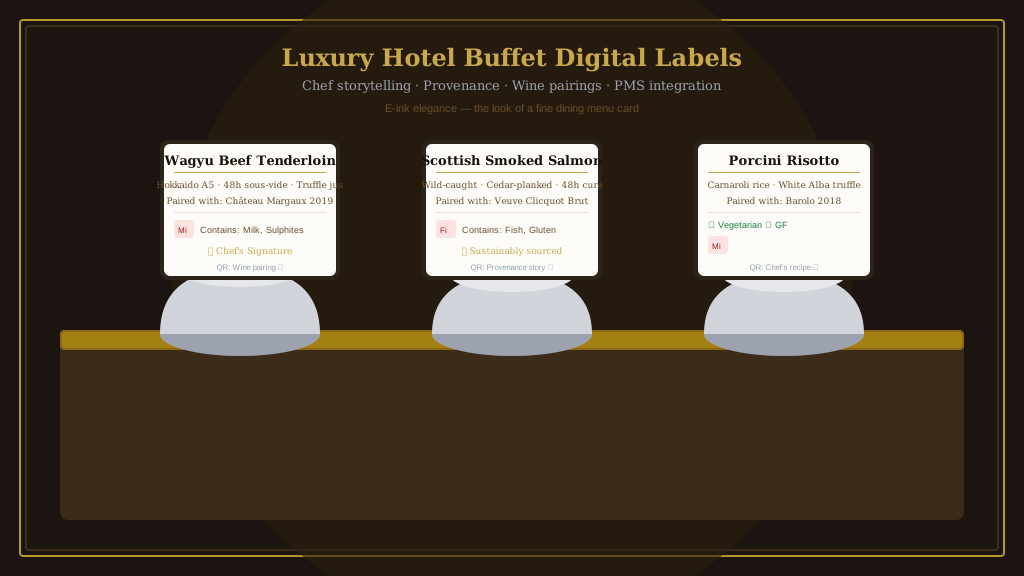
E-ink labels at luxury properties are specified differently from midscale hotel deployments. Larger label sizes (7.5" diagonal rather than 4.2") allow for multi-line chef notes alongside allergen information. High-contrast text on white backgrounds maintains the visual register of luxury printed materials. Custom label templates match property branding — typeface, colors, logo placement — rather than the generic templates in most ESL systems.
The content structure for a luxury label typically carries: dish name in the hotel typeface, chef name or sous vide marker where relevant, 3-4 line provenance or preparation note, dietary icons in a discreet icon row below the text, allergen information, and a freshness indicator. This information density is not achievable at 4.2" diagonal; the 7.5" and 13.3" label sizes that the luxury segment uses allow it.
Chef Storytelling and Provenance Information at the Buffet
Chef storytelling labels present a content management challenge that paper labels handle poorly. The provenance information changes when the supplier changes. The preparation method is per-batch, not per-week. If the chef has smoked this week with cherry wood rather than applewood, the label should reflect that. On paper, this level of per-batch update is impractical — it requires reprinting for every detail change. On a digital label system, updating the preparation note is a 30-second dashboard edit that pushes to the label within a minute.
Properties that implement chef storytelling labels consistently report two measurable outcomes: F&B satisfaction scores improve significantly for the breakfast and lunch buffet specifically (not dinner, where plated service already carries the storytelling through menu descriptions), and food waste at the specialty stations decreases as guests spend more time engaging with items they understand and value. Guests who can see that the charcuterie is house-cured rather than commercial take more of it, serve themselves more carefully, and waste less.
Personalization and Pre-Registration Dietary Profiles
The basic implementation: when a guest with a serious nut allergy checks in, the front desk alerts the F&B team. The chef reviews their standing buffet to identify which dishes are nut-free and flags those in the label management system with a visible indicator (a "safe for nut allergy" tag, distinct from the standard allergen icon, customized to the property). When the guest approaches the buffet, they can immediately see which dishes have been pre-vetted for their specific requirement, rather than having to interrogate each standard label.
More sophisticated implementations connect directly to the PMS. When a guest profile with confirmed dietary requirements is marked as checked in, the label management system automatically activates the dietary overlay for that requirement. When the guest checks out, the overlay deactivates. This requires integration between the PMS and the label system — a capability available in enterprise-tier digital label platforms but not in entry-level systems.
Ultra-luxury properties (Aman, Six Senses, Four Seasons individual resorts) deploy this as part of a comprehensive personalization program. The buffet label system knows which guests are in house, what their dietary profiles are, and can optionally trigger a dedicated label position reserved for that guest (e.g., a "dishes verified for [Guest Name]" section of the breakfast buffet, updated daily based on who is in house).
Bring Luxury-Standard Labeling to Your Property
BuffetDisplay supports luxury hotel specifications: large-format 7.5" and 13.3" labels, custom brand templates, chef storytelling content fields, and PMS integration for dietary pre-registration. Our team works with your F&B design team on template development.
Frequently Asked Questions
What are the best digital buffet labels for luxury hotels?
Luxury hotels require larger-format e-ink labels (7.5" or 13.3" diagonal) that can carry chef storytelling content alongside allergen information, in a visual style matching the property brand. The key differentiators for luxury deployment are: custom brand templates (typeface, colors, logo), content fields for chef notes and provenance information, multilingual display without layout compression, and PMS integration for dietary pre-registration.
How do luxury hotels use buffet labels for chef storytelling?
Digital label systems at luxury properties display provenance and preparation notes alongside allergen information. A label might read: "Smoked salmon — Pacific Northwest wild-caught, cedar-planked over applewood, house-cured 48 hours" rather than simply "Smoked salmon (fish)". When the preparation method or supplier changes, the note updates via a 30-second dashboard edit — impractical with printed labels. Properties using chef storytelling labels consistently see improved F&B satisfaction scores and lower food waste at specialty stations.
Can luxury hotel buffet labels connect to the PMS for dietary pre-registration?
Yes, enterprise-tier digital label systems support PMS integration for dietary pre-registration. When a guest profile with confirmed dietary requirements is marked as checked in, the label system can activate a dietary overlay across relevant buffet positions. When the guest checks out, it deactivates. Ultra-luxury properties (Aman, Six Senses, Four Seasons resort properties) use this as part of comprehensive personalization programs where specific buffet sections are verified and labeled for specific guests in house.
What label size should luxury hotels use for buffet displays?
Luxury hotel buffet labels are typically 7.5" diagonal (190mm) to accommodate chef storytelling content alongside allergen information at readable font sizes. Properties with very high information density (multilingual + chef notes + allergens + dietary icons) may specify 13.3" labels. The 4.2" labels used in midscale hotel deployments are too small for luxury content standards — they can carry name and allergens but not provenance or preparation notes at a readable size.
Related Articles
Holiday Buffet Management: Digital Labels During Peak Season
Discover how digital buffet labels help hotels and restaurants manage high-volume holiday buffets with real-time updates, guest satisfaction, and operational efficiency.
Read article →Buffet Labeling in Hotels: A Comprehensive Guide
Discover how hotels can transform their breakfast and dining buffets with digital labeling solutions that enhance guest experience, ensure compliance, and reduce operational costs.
Read article →